Can I Drink Coffee After Whitening My Teeth?

A brighter smile can instantly boost your confidence, which is why professional teeth whitening has become one of the most popular cosmetic dental treatments today. But after investing in a whiter smile, many patients ask the same question:
Can I still drink coffee after whitening my teeth?
If you’re someone who starts the morning with a hot cup of coffee in Eldersburg before heading to work or enjoying a weekend around Carroll County, you’re definitely not alone. At Eldersburg Family Dental, we hear this concern often from patients who want to protect their whitening results without giving up their favorite drink completely.
The good news? You usually don’t have to quit coffee forever. However, timing and proper care matter more than you may think.
Why Teeth Are More Sensitive to Stains After Whitening
Professional whitening treatments work by opening tiny pores in the enamel to lift deep stains from the teeth. Immediately after treatment, your enamel becomes temporarily more porous, making it easier for dark-colored foods and drinks to stain your teeth again.
Coffee is one of the biggest culprits because it contains:
- Dark pigments called tannins
- Acid that weakens enamel temporarily
- Ingredients that cling to tooth surfaces
That’s why dentists often recommend avoiding coffee for a short period after teeth whitening.
How Long Should You Wait Before Drinking Coffee?
Most dental professionals recommend waiting at least 48 hours after a whitening treatment before drinking coffee.
This waiting period is sometimes called the “white diet” phase. During this time, it’s best to avoid anything that could stain a white shirt, including:
- Coffee
- Tea
- Red wine
- Cola
- Soy sauce
- Tomato sauce
- Dark berries
The first two days are the most important because your teeth are especially vulnerable to discoloration.
If you recently had professional whitening at Eldersburg Family Dental, your dentist may provide personalized instructions depending on the whitening method used and the sensitivity of your teeth.
What Happens If You Drink Coffee Too Soon?
Drinking coffee immediately after whitening may lead to:
- Faster staining
- Uneven whitening results
- Tooth sensitivity
- Reduced longevity of treatment
While one cup may not completely ruin your smile, repeated exposure during the first 48 hours can noticeably affect your results.
Think of it this way: whitening gives your teeth a clean slate, and the early aftercare period helps preserve that fresh brightness.
Tips for Coffee Lovers After Teeth Whitening
You do not necessarily have to eliminate coffee from your routine forever. Here are practical ways to enjoy coffee while helping your smile stay brighter longer.
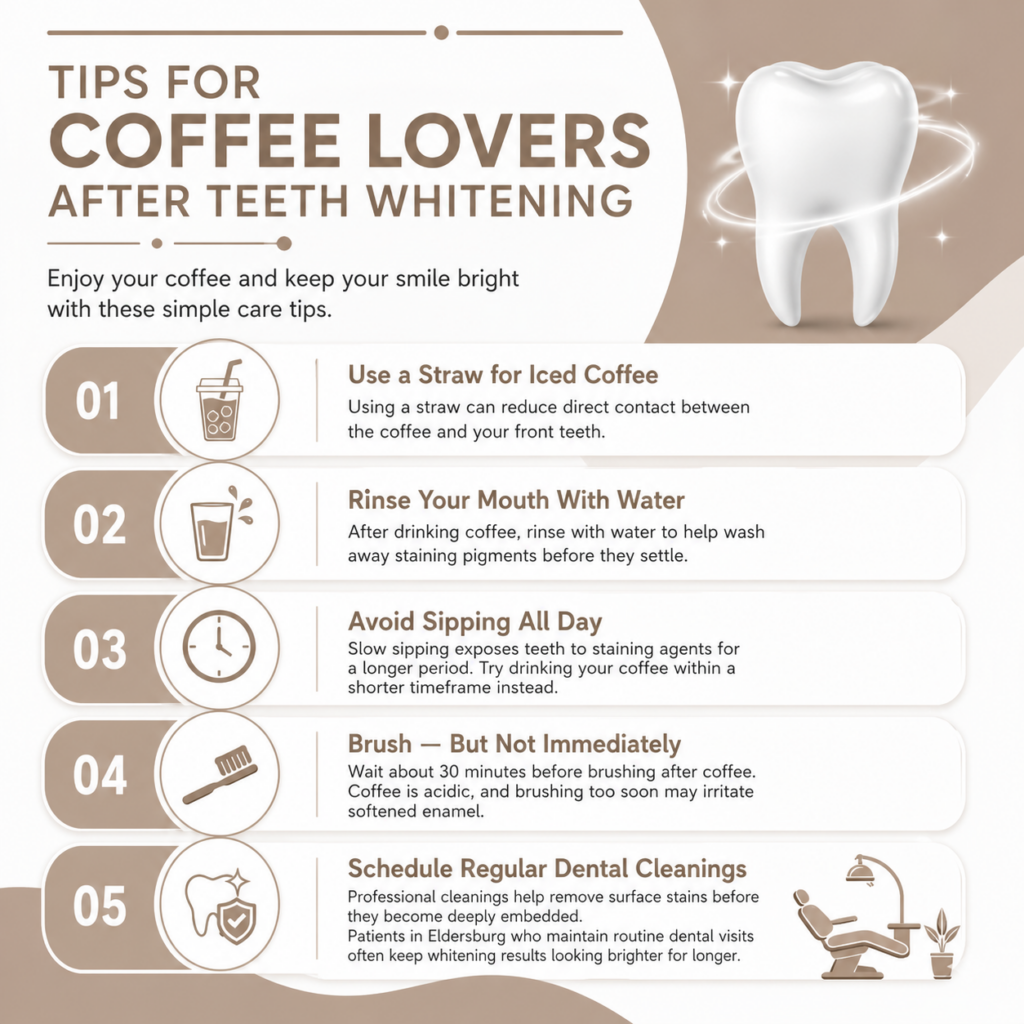
1. Use a Straw for Iced Coffee
If you enjoy iced coffee, using a straw can reduce direct contact between the coffee and your front teeth.
2. Rinse Your Mouth With Water
After drinking coffee, rinse with water to help wash away staining pigments before they settle on the enamel.
3. Avoid Sipping All Day
Slow sipping exposes teeth to staining agents for a longer period. Try drinking your coffee within a shorter timeframe instead.
4. Brush — But Not Immediately
Wait about 30 minutes before brushing after coffee. Coffee is acidic, and brushing too soon may irritate softened enamel.
5. Schedule Regular Dental Cleanings
Professional cleanings help remove surface stains before they become deeply embedded.
Patients in Eldersburg who maintain routine dental visits often keep whitening results looking brighter for longer.
Are Some Coffee Drinks Worse Than Others?
Yes. Certain coffee drinks stain teeth more than others.
More Likely to Stain
- Black coffee
- Espresso
- Dark roast coffee
Slightly Less Likely to Stain
- Coffee with milk
- Latte
- Cappuccino
Adding milk slightly dilutes staining pigments, though it does not completely prevent discoloration.
Cold brew coffee may also be somewhat less acidic, making it gentler on enamel for some patients.
Can Whitening Toothpaste Help?
Whitening toothpaste can help remove minor surface stains caused by coffee, but it cannot fully replace professional whitening treatments.
Some over-the-counter whitening products may also increase sensitivity if used too often. It’s best to ask your dentist which products are safest for your smile.
At Eldersburg Family Dental, patients often receive customized recommendations based on enamel health, sensitivity, and lifestyle habits.
How Long Does Professional Whitening Last?
Results vary depending on your habits, but many patients enjoy whitening results for several months to a few years.
Factors that affect longevity include:
- Coffee consumption
- Smoking
- Oral hygiene habits
- Diet
- Frequency of dental cleanings
Patients who follow aftercare instructions carefully often maintain their brighter smiles much longer.
Simple Ways to Keep Your Smile White Longer
Here are easy everyday habits that make a big difference:
- Brush twice daily
- Floss every day
- Drink water frequently
- Limit dark beverages
- Use dentist-approved whitening products
- Schedule regular cleanings
- Avoid tobacco products
Consistency matters more than perfection.
Protect Your Bright Smile
Teeth whitening can dramatically improve your confidence, but protecting those results requires smart aftercare — especially if coffee is part of your daily routine.
Fortunately, you do not have to choose between enjoying coffee and maintaining a brighter smile. With a little care, you can continue enjoying your favorite drinks while keeping your teeth looking their best.
If you’re considering professional whitening or want advice on maintaining your results, the team at Eldersburg Family Dental in Eldersburg can help you create a personalized plan for a healthier, brighter smile.
Book an appointment today to learn more about professional teeth whitening and long-term smile care.
Frequently Asked Questions
Can I drink coffee through a straw after whitening?
Yes, especially with iced coffee. A straw helps reduce direct contact between coffee and your teeth.
Is tea safer than coffee after whitening?
Not necessarily. Dark teas can stain teeth just as much — or sometimes more — than coffee.
How soon can I eat normally after whitening?
Most dentists recommend following a white-colored diet for about 48 hours after treatment.
Will coffee completely ruin my whitening results?
No, but drinking it too soon after treatment may reduce the brightness and longevity of your results.
How often can I whiten my teeth?
This depends on your enamel health and sensitivity. Your dentist can recommend a safe whitening schedule.