Addressing Bone Loss: Can You Still Get a Dental Implant?

Losing a tooth is more than just a cosmetic concern—it can impact your oral health, jawbone strength, and overall confidence. Many patients considering dental implants often wonder:
What if I have bone loss? Can I still get a dental implant?
At Eldersburg Family Dental, we understand that this is a common concern, and the good news is that bone loss doesn’t automatically rule out dental implants. Let’s explore what bone loss means, how it affects implants, and what solutions are available.
Understanding Bone Loss and Its Impact
When a tooth is lost, the jawbone in that area can gradually shrink over time. This process, known as bone resorption, occurs because the bone no longer receives stimulation from chewing. Left untreated, bone loss can lead to:
- Changes in facial structure, causing a sunken appearance
- Difficulty chewing and speaking properly
- Limitations in getting traditional dental implants
For residents in Eldersburg, this is particularly relevant since age-related tooth loss or delayed dental care can contribute to jawbone deterioration over time. But don’t worry—modern dentistry offers solutions that make implants possible even when bone loss is present.
Can You Get Dental Implants With Bone Loss?
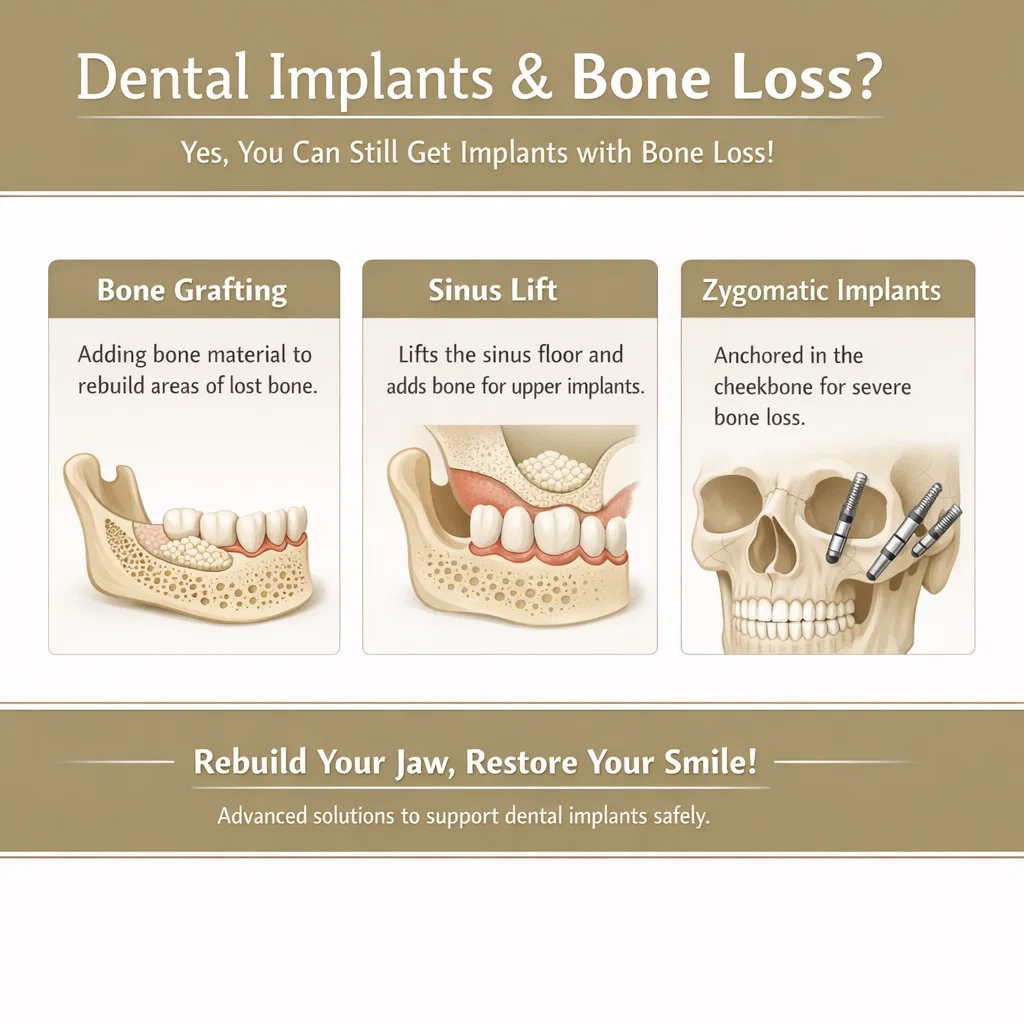
Yes! While sufficient bone density is critical for the long-term success of dental implants, bone grafting and other advanced procedures can rebuild your jawbone to support implants safely.
Common Solutions Include:
- Bone Grafting
- Bone grafting uses bone material (your own, donor, or synthetic) to rebuild areas of lost bone.
- After grafting, the new bone integrates with your jaw, providing a stable foundation for dental implants.
- Healing usually takes a few months, but it significantly improves implant success.
- Sinus Lift (for upper jaw implants)
- If the upper jaw lacks bone near the sinus, a sinus lift can raise the sinus floor and add bone.
- This procedure allows implants to be placed securely without compromising stability.
- Zygomatic Implants
- In severe cases of bone loss, zygomatic implants, which anchor into the cheekbone, may be an option.
- These are less common but provide a solution when traditional implants aren’t feasible.
At Eldersburg Family Dental, our dentists evaluate each case individually to recommend the safest and most effective approach for patients in Eldersburg and surrounding areas.
Signs You May Have Bone Loss
Before getting implants, it’s important to identify potential bone loss. Signs can include:
- Shifting or loose teeth
- Gum recession exposing more of your teeth
- Difficulty wearing dentures comfortably
- Sunken facial appearance
If you notice any of these, it’s best to schedule a consultation promptly. Early intervention can make implant placement easier and more predictable.
Preparing for Dental Implants with Bone Loss
Here’s what patients in Eldersburg should know before undergoing implant procedures:
- Comprehensive Evaluation
- 3D imaging or CT scans are used to assess bone quality and volume.
- Treatment Planning
- Your dentist will create a personalized plan that may include grafting, implant placement, and recovery timelines.
- Healing and Integration
- Bone grafting or sinus lifts may require several months of healing before implants can be placed.
- Post-Procedure Care
- Maintaining good oral hygiene, regular dental check-ups, and following your dentist’s instructions ensure the longevity of your implants.
Benefits of Dental Implants Even With Bone Loss
Getting a dental implant after addressing bone loss isn’t just about aesthetics—it restores function and long-term oral health:
- Prevents further bone deterioration by stimulating the jawbone
- Improves chewing efficiency and speech
- Enhances confidence with a natural-looking smile
- Supports adjacent teeth and overall oral structure
For patients in Eldersburg, this means you can regain your smile and enjoy your favorite foods without worry, whether it’s coffee from Main Street or a bite at a local diner.
Take the Next Step Toward a Strong Smile
Bone loss doesn’t have to stop you from getting a dental implant. With modern dental procedures, advanced imaging, and personalized treatment plans, even patients with significant bone loss can achieve a healthy, natural smile.
If you’re in Eldersburg and ready to explore your dental implant options, book a consultation with Eldersburg Family Dental today. Our team will guide you through the process, answer your questions, and help you regain the confidence that comes with a complete smile.
FAQs: Dental Implants and Bone Loss
Is bone grafting painful?
Most patients experience mild discomfort similar to a tooth extraction. Local anesthesia and sedation options ensure comfort during the procedure.
Can older adults get implants after bone loss?
Absolutely! Age alone isn’t a barrier. Many adults in their 60s or 70s successfully receive implants after bone grafting.
Are implants permanent?
With proper care and regular dental visits, implants can last decades and often a lifetime.