Broken Tooth? Here’s How a Dental Crown Can Save It

A broken tooth can happen when you least expect it—biting into something hard, an accidental fall, or even long-term wear that slowly weakens the enamel. Whatever the cause, it often brings the same immediate worries: Will I lose the tooth? Will it hurt more? Do I need an extraction?
The good news is that in many cases, a damaged tooth does not need to be removed. A dental crown can often restore both function and appearance, helping you keep your natural smile for years to come.
At Eldersburg Family Dental, patients are frequently surprised by how effectively a crown can “save” a tooth that looks beyond repair. Let’s walk through how it works and why it’s one of the most trusted restorative treatments in modern dentistry.
What Exactly Is a Dental Crown?
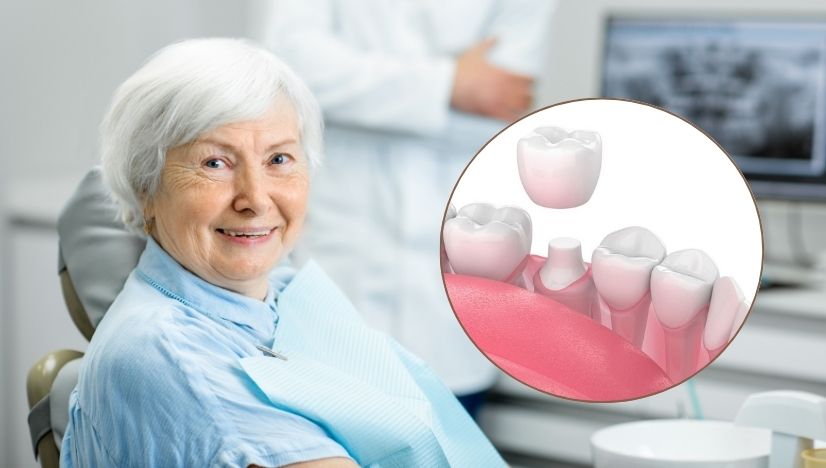
A dental crown is a custom-made “cap” that fits over a damaged tooth. Think of it like a protective helmet—it fully covers the visible portion of the tooth, restoring its shape, strength, and appearance.
Crowns are typically recommended when a tooth is:
- Cracked or fractured
- Severely worn down
- Weakened after a large filling
- Treated with a root canal
- Broken but still has a healthy root
The goal is simple: save the natural tooth structure while restoring full function.
How a Crown Saves a Broken Tooth
When a tooth breaks, the remaining structure is often too weak to function on its own. Without treatment, the damage can worsen, leading to pain, infection, or even tooth loss.
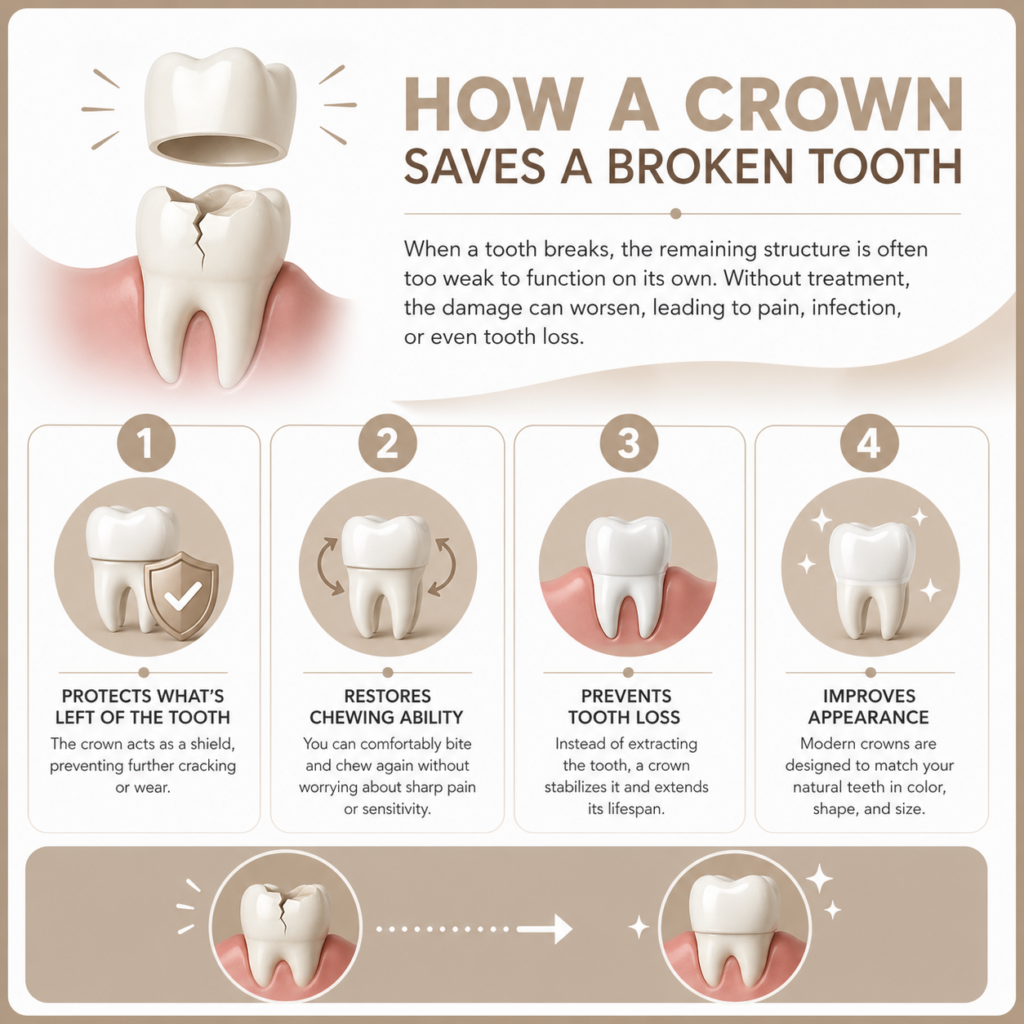
A dental crown helps in several key ways:
1. Protects What’s Left of the Tooth
The crown acts as a shield, preventing further cracking or wear.
2. Restores Chewing Ability
You can comfortably bite and chew again without worrying about sharp pain or sensitivity.
3. Prevents Tooth Loss
Instead of extracting the tooth, a crown stabilizes it and extends its lifespan.
4. Improves Appearance
Modern crowns are designed to match your natural teeth in color, shape, and size.
Common Causes of Broken Teeth
Understanding why teeth break can help prevent future damage. Some of the most common causes include:
- Biting ice, hard candies, or unpopped popcorn kernels
- Teeth grinding (bruxism), especially at night
- Old or large fillings that weaken tooth structure
- Sports injuries or accidents
- Decay that weakens enamel over time
In a community like Eldersburg, where active lifestyles and family sports are common, accidental tooth injuries are more frequent than people realize.
Signs You Might Need a Dental Crown
Not every broken tooth hurts immediately, which is why many people delay treatment. However, certain signs should not be ignored:
- Sharp pain when biting or chewing
- Sensitivity to hot or cold foods
- Visible cracks or missing pieces of a tooth
- A tooth that feels “weak” or rough
- Swelling or discomfort around a damaged tooth
Even if the pain is mild, it’s important to get checked early. Small cracks can quickly turn into major fractures.
What to Expect During the Crown Procedure
Many patients are nervous about dental procedures, but getting a crown is a straightforward and comfortable process.
Here’s what typically happens:
Step 1: Examination and X-rays
The dentist evaluates the tooth to confirm whether a crown is the best solution.
Step 2: Tooth Preparation
The damaged tooth is gently reshaped to make room for the crown.
Step 3: Impression or Digital Scan
A precise mold or scan is taken to ensure a perfect fit.
Step 4: Temporary Crown
A temporary crown protects your tooth while the permanent one is made.
Step 5: Final Placement
Once ready, the permanent crown is bonded securely in place.
Most patients return to normal activities quickly and notice immediate improvement in comfort.
Types of Dental Crowns
Depending on your needs, your dentist may recommend:
- Porcelain Crowns – Natural-looking and ideal for front teeth
- Porcelain-fused-to-metal (PFM) – Strong and durable for back teeth
- Zirconia Crowns – Extremely strong with excellent aesthetics
- Metal Crowns – Long-lasting, often used for molars
At Eldersburg Family Dental, the choice is personalized based on bite pressure, location of the tooth, and cosmetic goals.
Why Saving the Natural Tooth Matters
Whenever possible, preserving your natural tooth is the best option. Even though dental implants and bridges are excellent solutions, nothing fully replaces your original tooth structure.
Keeping your natural tooth:
- Maintains jawbone strength
- Keeps surrounding teeth stable
- Preserves natural bite alignment
- Often costs less than replacement options
A crown allows you to hold onto your natural tooth while still restoring full strength.
Benefits of Choosing a Crown for a Broken Tooth
Here’s why crowns are one of the most recommended treatments:
- Long-lasting durability
- Natural appearance
- Restores full chewing strength
- Prevents further dental complications
- Custom-designed for comfort and fit
With proper care, a crown can last 10–15 years or more.
How to Take Care of Your Dental Crown
Once your crown is placed, maintaining it is simple:
- Brush twice daily with a soft-bristle toothbrush
- Floss gently around the crown
- Avoid chewing ice or hard objects
- Wear a nightguard if you grind your teeth
- Visit your dentist regularly for check-ups
Good oral hygiene ensures your crown stays strong and functional for years.
Final Thoughts
A broken tooth doesn’t always mean losing your smile. In many cases, a dental crown can restore strength, appearance, and confidence in just a few visits.
If you’re experiencing tooth pain, sensitivity, or visible damage, it’s best not to wait. Early treatment can make all the difference between saving and losing a tooth.
At Eldersburg Family Dental, the focus is on preserving natural teeth whenever possible and providing long-lasting, comfortable solutions tailored to each patient.
Your smile deserves protection—and a dental crown might be exactly what it needs to stay strong for years to come.
FAQs About Dental Crowns
1. Can a crown fix a severely broken tooth?
Yes, as long as the root is healthy, a crown can often restore even significantly damaged teeth.
2. Is a crown better than extraction?
In most cases, yes. Preserving your natural tooth is usually the preferred option.
3. Will the crown look natural?
Modern crowns are designed to blend seamlessly with surrounding teeth in color and shape.
4. Does getting a crown hurt?
No, the procedure is done under local anesthesia, so you remain comfortable throughout.