NCDHM 2026: Common Dental Emergencies in Children and How to Handle Them

National Children’s Dental Health Month (NCDHM) is a great time to emphasize the importance of good oral hygiene for kids. The month of February offers parents a great opportunity to teach their young ones how to brush their teeth, floss, and eat healthy foods to promote lifelong good oral health. However, despite our best intentions, accidents can still happen, and dental emergencies can occur at any time.
Kids are naturally curious and energetic, making them susceptible to situations that can lead to dental problems. Whether it’s a knocked-out tooth, a sore toothache, or a soft tissue injury, being prepared for these types of dental emergencies can make a big difference. It is crucial to be aware of the typical dental problems kids face and how to address them to ensure their smiles stay healthy and intact.
Understanding Common Dental Emergencies in Children
Children’s dental emergencies are usually the result of their active nature, whether they are playing sports, playing with friends, or just being curious. While not all emergencies will cause long-term problems, the difference between a minor and major issue often depends on how quickly it is addressed and what the parent knows to do. Some of the most common dental emergencies that children can face include:
Knocked-Out Tooth
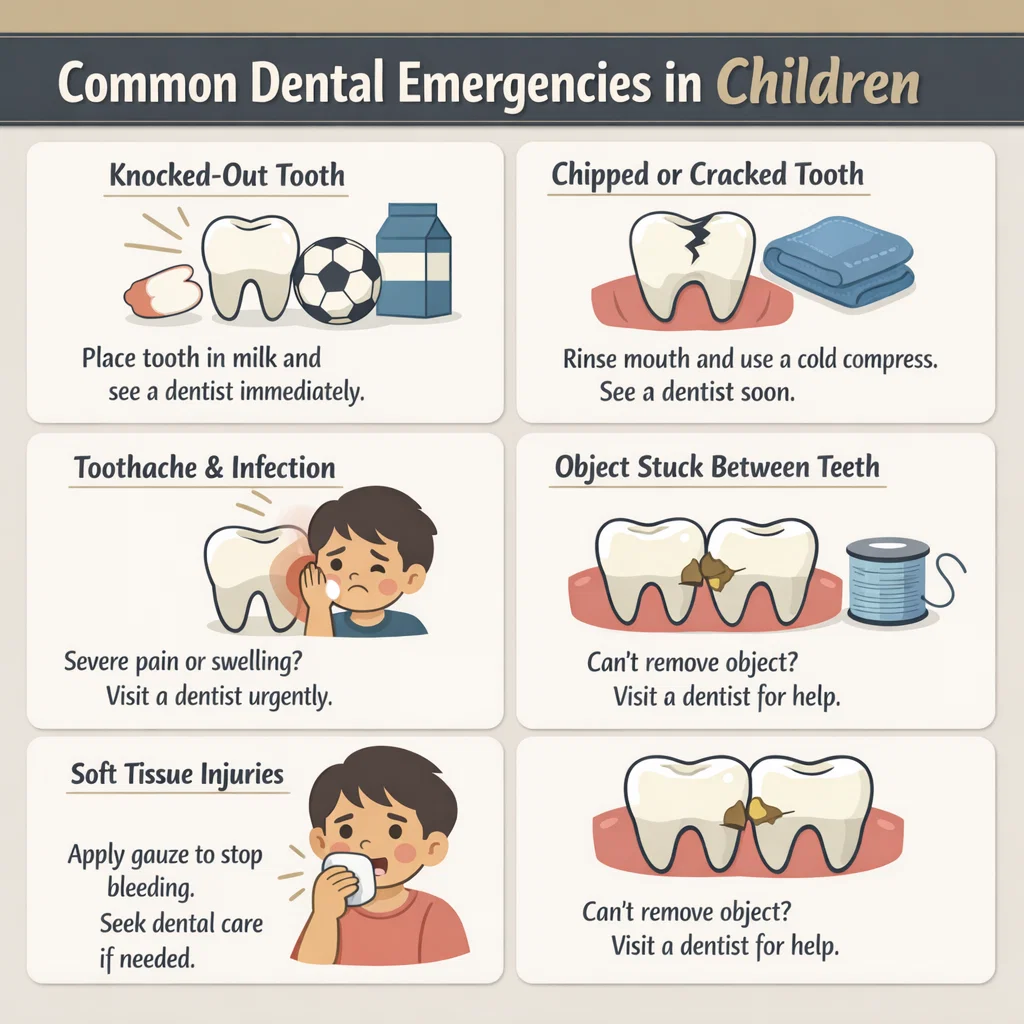
Sports injuries, falls, or just plain rough play can cause a child to lose a tooth. While a lost baby tooth may not be a problem, a lost permanent tooth is an emergency situation that requires immediate attention. If the tooth is clean, it can be replaced in the socket, or it can be stored in milk and seen to by an emergency dentist.
Chipped or Cracked Teeth
A chipped or cracked tooth could result from an injury, eating hard foods, or biting on something that is too hard. Although the tooth might not necessarily be painful, it is still important to visit a dentist to prevent infection or further complications. Rinsing the mouth with warm water and using a cold compress can help reduce swelling until a professional is consulted.
Toothaches and Infections
Toothaches can be an indication of a serious problem, such as a cavity or infection. If your child has a toothache, it is important to treat it promptly. Swelling or pus around the tooth may indicate an infection that requires urgent attention. A cold compress can be used to relieve the pain until an appointment with an emergency dentist is made.
Objects Stuck Between Teeth
In some cases, small objects such as food particles or toys may become lodged between a child’s teeth. If the object cannot be dislodged using floss or brushing, do not attempt to remove it using sharp objects. Rather, make an emergency visit to a dentist who can remove the object without damaging the teeth.
Soft Tissue Injuries
Cuts and tears to the gums, lips, or cheeks are common after falls and accidents. While minor cuts can be treated at home, more serious injuries may need professional attention. You can assist your child by applying clean gauze to the area to stop the bleeding until you visit a dentist.
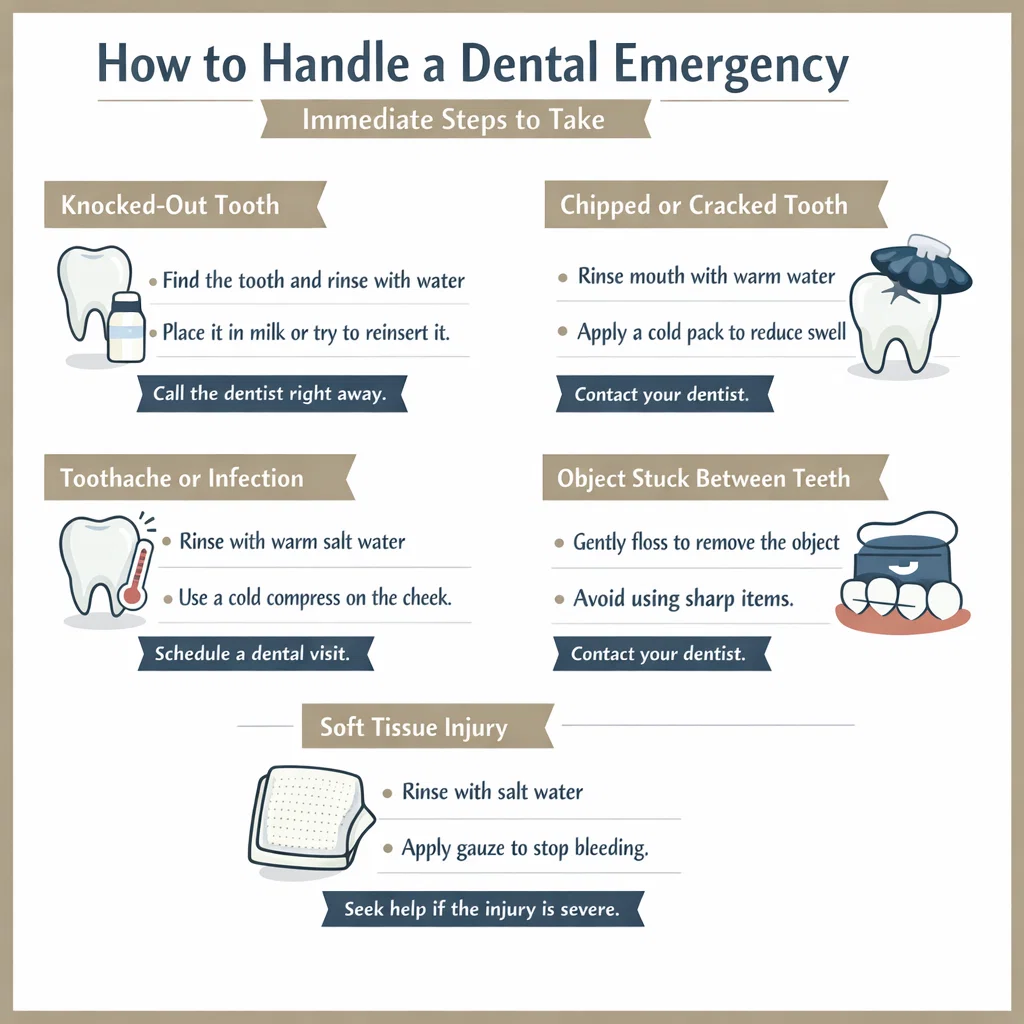
How to Handle a Dental Emergency: Immediate Steps to Take
If you ever find yourself in a dental emergency, it is essential that you remain calm and take immediate action. Here are some steps you can take in the event of the most common dental emergencies:
Knocked-Out Tooth:
- Locate the tooth and rinse it with water (do not use any kind of scrubbing motion).
- If the tooth is an adult tooth, attempt to replace it in the socket. If this is not possible, store it in milk or saline solution.
- Contact an emergency dentist in Eldersburg right away.
Chipped or Cracked Teeth:
- Rinse the mouth with warm water.
- Apply an ice pack to the area to reduce swelling.
- Contact an emergency dentist to evaluate the situation.
Toothache or Infection:
- Rinse your child’s mouth with warm salt water to help reduce swelling.
- On the outside of your child’s cheek, use a cold compress.
- Make an emergency dental appointment to address the problem.
Objects Stuck Between Teeth:
- Gently try to floss the object away.
- If that doesn’t work, do not use sharp objects and call your dentist.
Soft Tissue Injuries:
- For minor injuries, rinse with warm salt water.
- Use a gauze or a clean cloth to gently apply light pressure.
- If the injury is severe, go to an emergency dentist.
When to Call an Emergency Dentist?
Dental emergencies can happen at any time, even when the dentist is not in the office. If your child is facing a dental emergency, it is always best to seek immediate treatment to avoid further complications. If you are unsure whether your child has a dental emergency, it is always a good idea to contact a dental professional for advice.
What Happens During a Pediatric Dental Emergency Visit
If your child is facing a dental emergency, you may be nervous. However, by understanding what to expect during the visit, you can make the treatment journey easier for yourself and your child. Here is a step-by-step guide on what to expect during a pediatric dental emergency visit:
1. Initial Assessment
The dentist will start by conducting an initial assessment of the injury or problem. This may include questions about the incident that led to the emergency, your child’s symptoms, and any pain your child is feeling.
2. X-rays and Imaging
Based on the situation, the dentist may order X-rays to assess for damage to the teeth, gums, or bone structure. This will help the dentist determine the correct treatment for the problem.
3. Pain Management
If your child is in pain, the dentist will do everything possible to manage the pain. This may involve using local anesthetics or a cold compress to numb the area and reduce your childis pain.
4. Treatment Plan
Once the injury has been evaluated, the dentist will explain the available treatment plan. Whether it is reattaching a knocked-out tooth, filling a cavity, or treating a soft tissue injury, the dentist will walk you through the process so you understand what is going to happen next.
5. Follow-up Care
Depending on the type of emergency, follow-up appointments may be required. The dentist will review the follow-up care instructions to ensure your child heals properly.
By understanding these steps, you will feel better prepared and more at ease when visiting the dentist for a pediatric dental emergency.
Protecting Your Child’s Smile with Prompt Care
Dental emergencies are bound to happen, but being prepared for them can make a world of difference in your child’s dental care. Prompt care in dental emergencies can alleviate pain, prevent infection, and even save a tooth. With these easy steps and the help of an emergency dentist, you can make sure your child’s smile stays healthy and happy.
If your child has a dental emergency, do not hesitate to contact Eldersburg Family Dental. We are here to give you immediate care and assistance, ensuring your child’s comfort and well-being. Schedule an appointment with us today and let us help you keep your child’s dental health on track!
Questions People Ask About Dental Emergency
1. What should I do if my child knocks out a permanent tooth?
If your child knocks out a permanent tooth, find the tooth and rinse it gently with water. Try placing it back into the socket, or keep it in a container of milk. Contact an emergency dentist immediately for the best chances of saving the tooth.
2. How can I relieve my child’s toothache at home?
Rinse your child’s mouth with warm salt water to ease discomfort and reduce swelling. Apply a cold compress to the outside of their cheek. Schedule an appointment with an emergency dentist to address the underlying cause of the pain.
3. What should I do if my child chips a tooth?
Try flossing around the object gently. If that doesn’t work, avoid using sharp tools and contact your dentist. An emergency dentist can safely remove the object without damaging the teeth or gums.
4. How can I remove an object stuck between my child’s teeth?
Try flossing around the object gently. If that doesn’t work, avoid using sharp tools and contact your dentist. An emergency dentist can safely remove the object without damaging the teeth or gums.
5. When should I seek emergency dental care for my child?
You should seek emergency dental care if your child feels severe pain, knocks out a permanent tooth, has a serious soft tissue injury, or if a tooth infection is suspected. Prompt care can prevent complications and relieve discomfort.
6. Can my child’s tooth injury heal on its own?
Minor dental injuries may heal on their own, but it’s important to have a dentist evaluate the damage to ensure no further treatment is needed. Always consult with a professional if you’re unsure.