How Bonding Can Give You the Perfect Tooth Shape
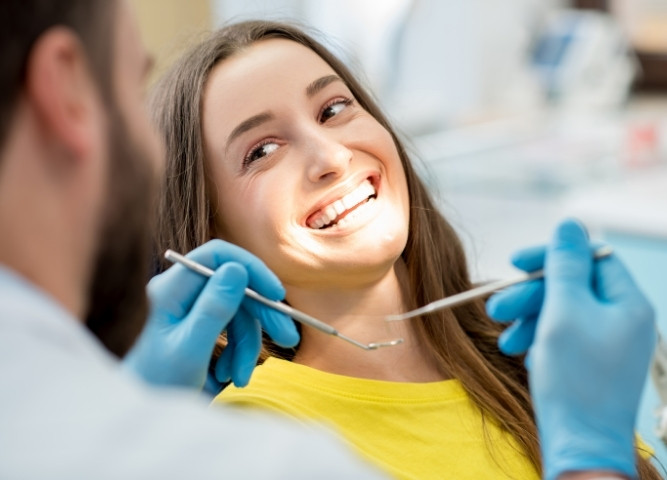
If you’ve ever noticed a chipped edge, uneven length, or slightly irregular tooth shape, you’re not alone. These small imperfections often stand out more than you expect, especially in photos or conversations. Even minor shape issues can disrupt the balance of your smile and affect how confident you feel day to day.
Tooth shape plays a bigger role than most people realize. When proportions are off, even healthy teeth may appear misaligned or worn. The good news is that there’s a simple way to improve this without complex treatment. After the first consultation, many patients explore dental bonding as a straightforward option to refine their smile.
This approach focuses on reshaping and enhancing what you already have. It works quickly, looks natural, and helps create a more balanced appearance without changing your entire smile structure.
Why Tooth Shape Matters More Than You Think
Tooth shape is one of the key elements that define how your smile looks and functions. Even small differences in size or contour can affect overall harmony. When teeth are proportionate, your smile appears more aligned, even if there are minor spacing concerns.
Symmetry plays a major role in facial balance. Teeth that match in width and length create a smoother visual flow. This balance complements your facial features and supports a more natural appearance. When shapes are uneven, attention often shifts to those irregularities instead of the smile as a whole.
Beyond aesthetics, shape also affects function. Uneven edges or worn areas can change how your teeth meet when you bite. Over time, this can lead to uneven wear or added pressure on certain teeth. Correcting shape helps distribute that pressure more evenly.
There’s also a psychological aspect. People often feel more confident when their smile looks consistent and well-shaped. Whether you’re at a local event in Eldersburg or enjoying time at Piney Run Park, feeling comfortable with your smile can make everyday interactions easier and more enjoyable.
What Is Dental Bonding and How Does It Work
Dental bonding is a cosmetic technique that uses a tooth-colored composite resin to improve the shape and appearance of teeth. The material is carefully applied and sculpted to match your natural enamel, making the result blend seamlessly with surrounding teeth.
The process is efficient and typically completed in a single visit. It begins with light surface preparation. This step helps the material adhere properly without removing significant tooth structure. In most cases, no anesthesia is needed unless the area is sensitive.
Once the tooth is prepared, the resin is applied in layers. Each layer is shaped with precision to build the desired contour. This is where the transformation begins with dental bonding. The provider adjusts the material to improve length, smooth edges, or refine proportions.
After shaping, a special curing light is used to harden the material. This step locks the structure in place and ensures durability. The final stage involves polishing the surface to match the shine and texture of natural enamel.
One of the biggest advantages is the immediate result. You walk in with concerns and leave with a refined shape the same day. Patients visiting Eldersburg Family Dental often appreciate how efficient the process of dental bonding is, especially when balancing busy schedules around Liberty Road or nearby communities.
How Bonding Reshapes and Perfects Tooth Structure
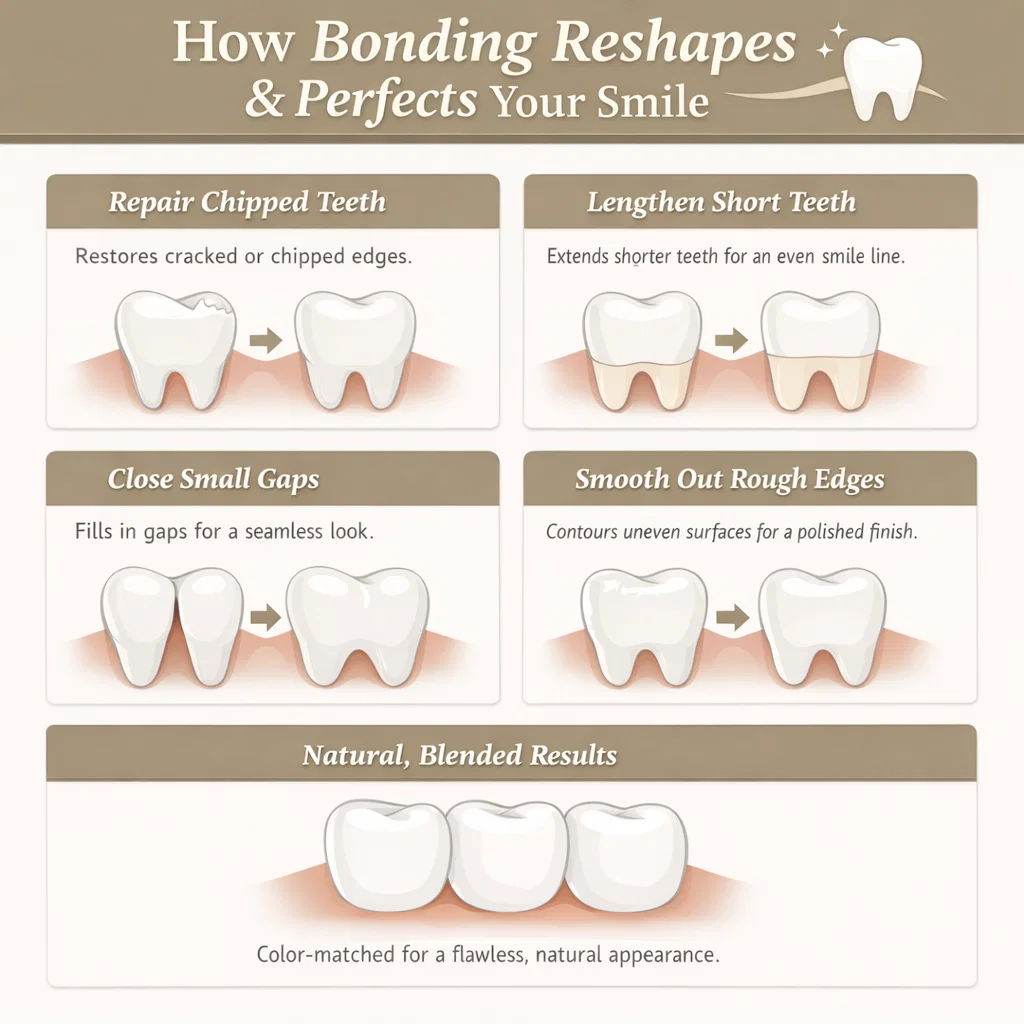
Bonding focuses on enhancing the existing tooth rather than replacing it. This makes it a practical option for improving shape without extensive treatment. The material is applied with precision, allowing for subtle yet noticeable changes.
Chipped edges are one of the most common concerns addressed. Even a small chip can affect how a tooth reflects light. By rebuilding that edge, the tooth regains a smooth, natural outline.
Length adjustments are also possible. If one tooth appears shorter than the others, bonding can extend it slightly to create a more even smile line. This is especially helpful for front teeth that play a major role in appearance.
Small gaps can be softened by adding material along the sides of teeth. Instead of orthodontic movement, this approach visually reduces spacing while maintaining a natural look.
Irregular surfaces can be smoothed out as well. Teeth that appear rough or uneven can be contoured to reflect light more evenly, improving overall brightness.
The key benefit is how well the material blends. The resin is color-matched to your teeth, so the final result looks consistent. Instead of appearing altered, your smile simply looks more balanced and refined.
Common Smile Concerns Bonding Can Fix
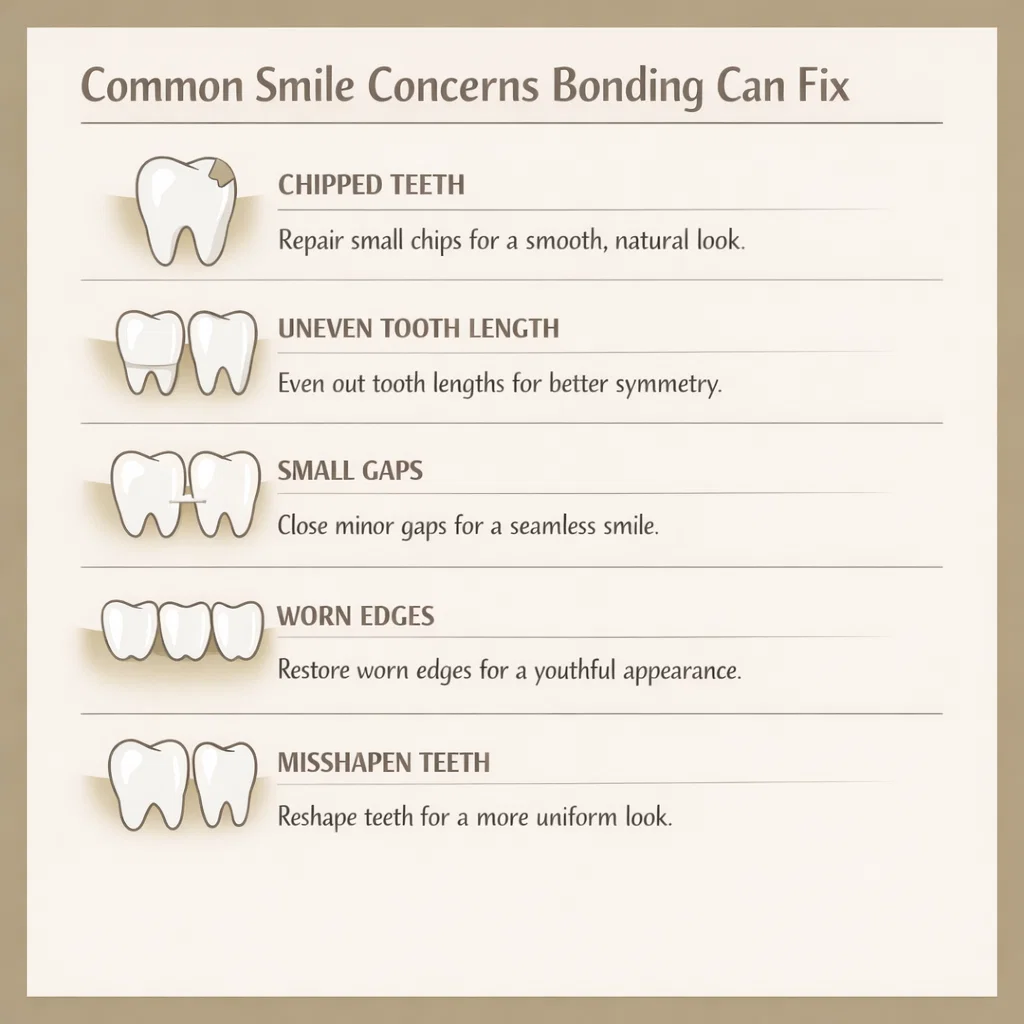
Many patients seek treatment for concerns that seem minor but impact their confidence. Bonding addresses these issues with precision and efficiency.
Small chips are often the first concern. These can happen from everyday wear or minor accidents. Even when painless, they can change the appearance of your smile.
Uneven tooth length is another common issue. When one tooth appears shorter or worn down, it can disrupt symmetry. Bonding restores balance by adjusting proportions.
Gaps between teeth can also be improved. While larger spacing may require other approaches, small gaps can often be softened with this technique.
Worn edges from grinding or natural aging can make teeth appear flat. Restoring those edges helps recreate a more youthful contour.
Misshapen teeth, whether naturally or due to wear, can be reshaped to match surrounding teeth. This creates a more consistent and harmonious look.
The Artistic Side of Bonding Designing Natural Tooth Shape
Achieving natural results requires more than applying material. It involves careful planning and attention to detail. Each tooth has unique characteristics, including color variation and surface texture.
Matching the shade is only one part of the process. Natural teeth have layers and translucency that affect how light passes through them. Replicating this effect ensures the result does not look artificial.
Proportion is another key factor. The width-to-length ratio must align with surrounding teeth. Even slight adjustments can improve the overall appearance.
Contour also plays a role. Subtle shaping along the edges and surfaces helps the tooth blend seamlessly. These details are what enhance the look to be natural rather than noticeable.
Benefits of Choosing Dental Bonding
Bonding offers several advantages for patients looking to improve tooth shape without extensive procedures. One of the main benefits is that it is minimally invasive. The natural tooth structure remains largely intact.
The process is efficient. Most cases are completed in a single visit, making it convenient for busy schedules. There is no need for temporary restorations or multiple appointments.
Comfort is another advantage. Since little to no drilling is involved, anesthesia is often unnecessary. This makes the experience straightforward and manageable.
Results are immediate. You can see the improvement as soon as the procedure is complete. This instant change often boosts confidence right away.
For many patients in Eldersburg and nearby areas, the combination of efficiency and natural results makes this approach appealing.
How Long Does Dental Bonding Last
Bonding can last several years with proper care. On average, results remain stable for three to ten years, depending on daily habits and maintenance.
Durability is influenced by how the teeth are used. Habits like grinding or biting hard objects can place stress on the material. Using protective solutions, such as night guards, can help extend longevity.
Diet also plays a role. Foods and drinks that cause staining may gradually affect the appearance of the material. Maintaining good oral hygiene helps preserve its look.
Regular checkups are important. Professional cleanings and evaluations ensure that the bonded areas remain in good condition.
What to Expect After the Procedure
After bonding, results are visible immediately. You can return to normal activities the same day. Some patients notice mild sensitivity, but it usually resolves quickly.
Eating and drinking can continue as usual, though it helps to avoid strongly staining foods for the first couple of days. This allows the surface to maintain its polished appearance.
Daily care remains simple. Brushing and flossing as usual helps keep the area clean. Routine visits support long-term results and allow for early adjustments if needed.
Who Is a Good Candidate for Dental Bonding
Bonding works well for individuals with minor cosmetic concerns. It is ideal for those looking to improve shape without extensive procedures.
Patients with healthy teeth and gums are typically good candidates. The technique enhances the existing structure rather than addressing major structural issues.
It is also suitable for those who want quick results. Since the process of dental bonding in Eldersburg is completed in one visit, it fits well into busy routines.
Maintaining Your Results for Long-Term Shape and Aesthetics
Long-term results depend on consistent care. Daily brushing and flossing help maintain both appearance and health.
Avoiding excessive pressure on teeth is important. Habits like chewing ice or using teeth as tools can damage the material.
Professional cleanings play a key role. Regular visits help maintain polish and identify any areas that may need minor touch-ups.
If needed, small adjustments can be made over time to keep the shape consistent.
Improving tooth shape can make a noticeable difference in how your smile looks and feels. Small adjustments often create a more balanced and confident appearance.
If you’re considering ways to refine your smile, a consultation can help you understand your options. The team at Eldersburg Family Dental provides personalized guidance based on your goals.
A well-shaped smile doesn’t require complex changes. With the right approach, you can achieve natural, lasting results that fit your lifestyle.
What People Ask
Is bonding strong enough for daily use?
Bonding is durable for normal chewing and speaking functions. However, avoiding habits like biting hard objects or grinding helps maintain its strength and prevents premature wear or chipping.
Does bonding require removing natural tooth structure?
Very little to no enamel removal is required for bonding. The process focuses on adding material rather than reshaping the natural tooth, which helps preserve the original structure.
Can bonding change the size of my teeth?
Yes, bonding can increase length, width, or overall proportions. It is often used to create a more balanced smile by adjusting small size differences between teeth.
Will bonded teeth stain over time?
Bonded material can stain gradually, especially with frequent exposure to coffee, tea, or similar beverages. Good oral hygiene and periodic polishing help maintain a consistent appearance.
How long does a bonding appointment take?
Most bonding procedures are completed in one visit, often within 30 to 60 minutes per tooth. The exact time depends on how many teeth are being treated.