Invisalign Aligner Schedule in Eldersburg, MD

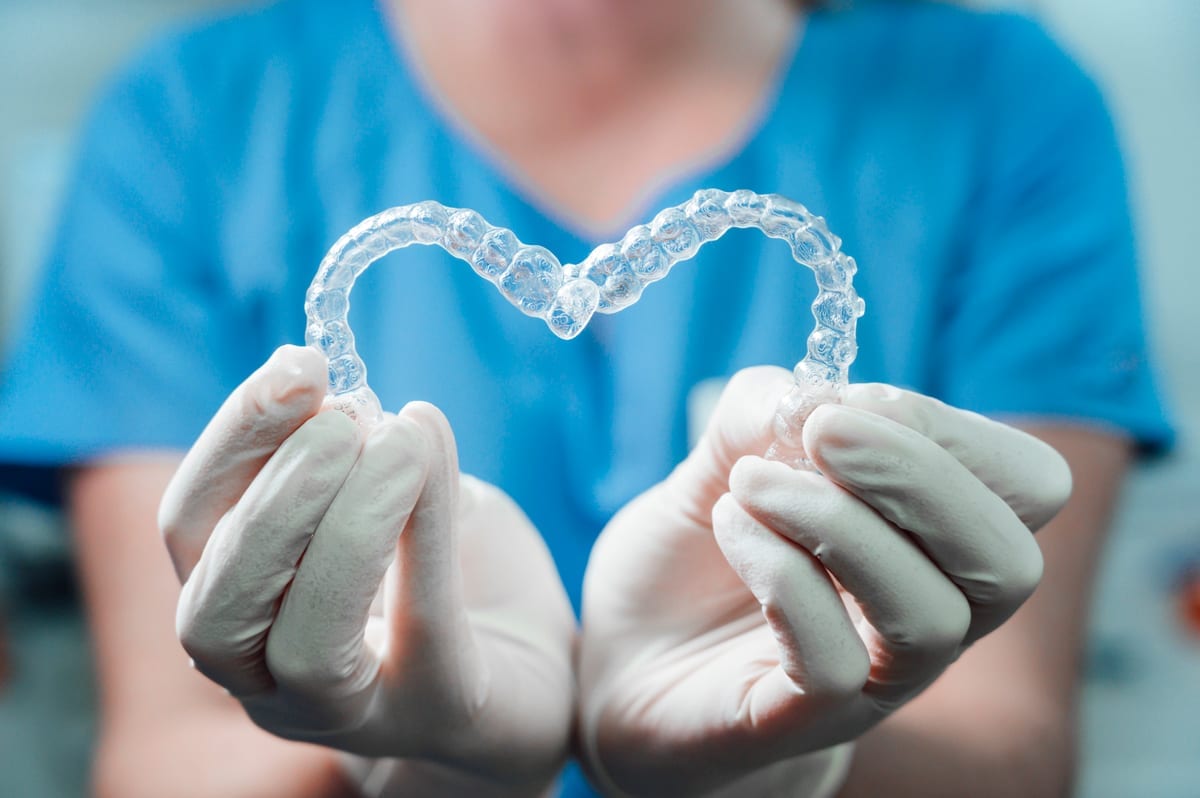
If you’ve started Invisalign treatment, you’ve probably wondered: why do my aligners change every two weeks? It’s one of the most common questions Dr. Lisa Patel hears at Eldersburg Family Dental. Understanding why your Invisalign aligners change every two weeks in Eldersburg helps you stay committed to your treatment plan. The short answer is that each tray is designed to move your teeth a tiny, precise amount — and then it’s time for the next step.
How Invisalign Actually Moves Your Teeth
Invisalign works through controlled, consistent force. Each aligner tray is custom-made to apply gentle pressure to specific teeth. That pressure gradually shifts teeth into a new position over time. The process is slow by design — rushing tooth movement causes damage to roots and surrounding bone.
Your teeth move because of a biological process called bone remodeling. When pressure is applied, the bone on one side of a tooth breaks down. New bone forms on the other side to support the tooth’s new location. This cycle takes time, which is why patience is essential during treatment.
Each aligner tray moves teeth by roughly 0.25 millimeters. That may sound tiny, but those small shifts add up significantly over weeks and months. By the end of your treatment, your teeth will have traveled a meaningful distance — millimeter by millimeter.
Why the Two-Week Schedule Makes Scientific Sense
The two-week aligner change schedule is not arbitrary. Dental researchers and orthodontists determined this timeframe through clinical studies. Two weeks gives your bone and tissue enough time to stabilize before the next aligner takes over. Changing aligners too quickly can cause discomfort and even reverse progress.
Wearing each tray for 20 to 22 hours per day is critical to this process. If you remove your aligners too often, the bone doesn’t receive consistent pressure. That inconsistency slows treatment and can make each new tray feel tight longer than necessary. Consistency is the engine that drives Invisalign results.
Some patients on accelerated protocols switch trays every seven to ten days. Dr. Patel evaluates this option on a case-by-case basis. Not everyone qualifies for a faster schedule, and skipping ahead without guidance can disrupt the treatment sequence entirely.
The Role of Attachments and How They Help Each Aligner Work
Many Invisalign patients receive small tooth-colored bumps called attachments. These are bonded directly to specific teeth and serve as anchors for the aligners. They help the trays grip teeth more effectively and apply force in precise directions. Without attachments, certain complex movements simply wouldn’t be possible.
Attachments are especially helpful for rotating teeth or moving them vertically. Standard aligner plastic alone cannot exert enough targeted force for these movements. Think of attachments as handles that let the aligner grab and guide each tooth more accurately. They’re part of why modern Invisalign can treat cases that once required traditional braces.
You may notice some aligners feel tighter than others. That’s usually because those trays are doing more complex work. Attachments working alongside a new aligner can create extra pressure in the first 24 to 48 hours. That sensation is completely normal and typically fades quickly.
Here are some key facts about how attachments support your Invisalign treatment:
- They are made from tooth-colored composite resin — the same material used for fillings
- They are bonded temporarily and removed at the end of treatment
- Not every patient needs them — your case complexity determines placement
- They improve aligner retention so trays stay snug against your teeth
- Different shapes target different types of tooth movement
What Refinements Are and Why They May Be Part of Your Plan
Even the most carefully planned Invisalign treatment sometimes needs a mid-course correction. These corrections are called refinements. Refinements are a new series of aligners created after your teeth are rescanned mid-treatment. They fine-tune the final outcome and ensure your teeth reach their ideal positions.
Refinements are not a sign that something went wrong. Teeth sometimes respond differently than the initial digital simulation predicted. Bone density, bite habits, and how well you wore your aligners all influence how teeth move. Refinements simply account for the reality of working with living tissue.
Dr. Patel monitors your progress at every check-in appointment here in Eldersburg. If your teeth are slightly off-track, refinements get treatment back on course. Most patients require at least one round of refinements, so budgeting for this possibility is wise from the start.
Benefits of refinements during Invisalign treatment include:
- Correcting teeth that didn’t move exactly as planned
- Addressing bite issues that emerged during treatment
- Achieving more precise final alignment before retainers
- Ensuring your smile result matches the original treatment goal
What to Expect at Each Stage of Your Invisalign Journey in Eldersburg
Your Invisalign treatment at Eldersburg Family Dental begins with a 3D digital scan of your teeth. That scan creates a precise model used to design every aligner in your series. You’ll actually see a virtual simulation of your expected results before treatment even starts. This planning stage is where the two-week schedule is mapped out from beginning to end.
Once your aligners arrive, Dr. Patel will walk you through how to insert and remove each tray. You’ll also learn how to care for your aligners and your teeth during treatment. Keeping aligners clean prevents staining and bacterial buildup. Rinsing them every time you remove them is one of the simplest habits that protects your progress.
Check-in appointments typically happen every six to eight weeks. These visits let Dr. Patel confirm your teeth are tracking correctly with each tray. If you ever experience unusual pain or notice a tray doesn’t fit properly, contact the office right away. Invisalign is a part of the broader Cosmetic Dentistry services offered at Eldersburg Family Dental.
Here’s a simplified overview of the Invisalign process step by step:
- 3D digital scan and treatment simulation
- Custom aligner series fabricated in a lab
- Initial placement appointment with attachment bonding if needed
- Two-week aligner changes at home per Dr. Patel’s schedule
- Check-in visits every six to eight weeks
- Refinements if needed mid-treatment
- Final retainer fitting to hold your results
Protecting Your Results After Your Final Aligner
Finishing your last aligner tray is a major milestone. But teeth have a natural tendency to drift back toward their original positions. This is called relapse, and it happens to nearly everyone without consistent retainer use. Wearing your retainer as directed is the final — and permanent — step in your Invisalign journey.
Most patients wear retainers nightly long-term after active treatment ends. Dr. Patel will provide specific guidance based on your case. The bone surrounding your teeth takes months to fully solidify in the new position. Retainers hold everything in place during that stabilization period and beyond.
If you ever damage or lose a retainer, contact Eldersburg Family Dental promptly. Gaps in retainer use — even short ones — can allow noticeable shifting. If you experience a dental emergency during or after Invisalign treatment, our Emergency Dentistry team is here to help quickly.
Understanding why your Invisalign aligners change every two weeks in Eldersburg empowers you to take ownership of your treatment. Every tray change is a small victory on the way to your finished smile. Trust the process, wear your aligners consistently, and lean on Dr. Patel’s expertise every step of the way. Book Now to schedule your appointment with our team.
Frequently Asked Questions
Why do Invisalign aligners need to be changed every two weeks?
Each aligner applies a specific amount of pressure to move teeth a small, controlled distance. After about two weeks, that movement is complete and the bone begins to stabilize. Switching to the next tray continues the progression. Changing too early or too late can disrupt the carefully planned sequence.
What happens if I forget to switch my aligners on time?
Wearing a tray longer than prescribed is generally less harmful than switching too early. However, extended wear can slow your overall treatment timeline. If you consistently forget to switch trays, set a calendar reminder or alarm. Contact Dr. Patel if you’re unsure whether to move forward or stay with your current tray.
Will each new aligner tray hurt when I first put it in?
Mild pressure and slight discomfort are normal when you insert a new tray. This sensation typically peaks within the first 24 to 48 hours and then fades. Over-the-counter pain relievers can help during that adjustment window. Many patients switch to a new tray at bedtime so they sleep through the initial tightness.
How many aligner trays will I need in total?
The total number of trays depends on how much tooth movement your case requires. Minor corrections may involve as few as 10 to 15 trays. More complex cases can involve 30 or more trays plus refinements. Dr. Patel will give you a personalized estimate during your initial consultation at Eldersburg Family Dental.
Can I speed up my Invisalign treatment by switching trays faster?
Switching trays ahead of schedule is not recommended without Dr. Patel’s specific guidance. Bone remodeling requires adequate time to occur safely. Rushing the process can cause root damage, ineffective tooth movement, or a poor final result. If you’re interested in accelerated protocols, discuss that option directly with Dr. Patel to see if you qualify.